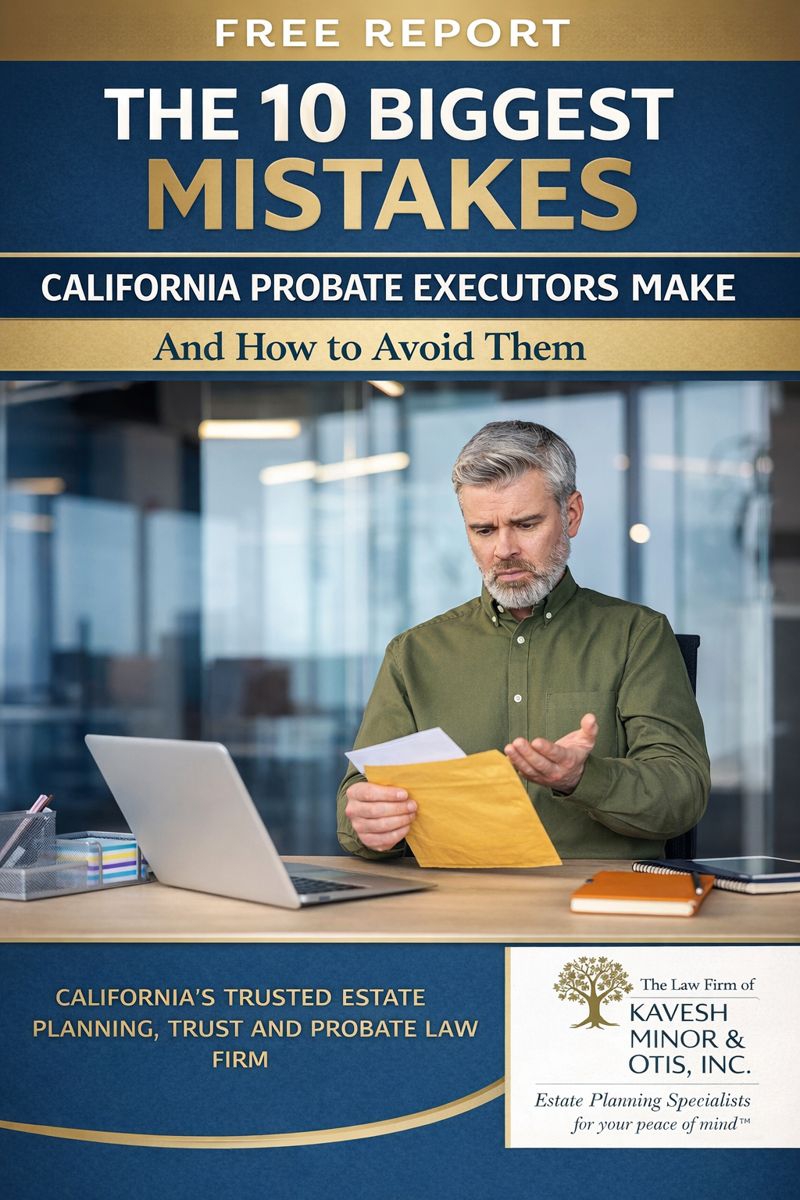
Download a free California-specific guide written for probate executors and administrators. Learn the most common probate mistakes and how to avoid delays, disputes, and unnecessary liability.
Free California Probate Guide for Executors and Administrators
Being named executor (or court-appointed administrator) is not just an honor. In California, probate is a court-supervised legal process with required notices, deadlines, and strict rules about what you can do and when. Many well-intentioned personal representatives make avoidable mistakes that lead to delays, conflict, and potential personal liability.
This free report explains the most common probate executor mistakes we see in California estates and provides practical steps to help you reduce stress, minimize delays, and protect yourself.
Why Executors Make Costly Probate Mistakes
Probate is not “just paperwork.” The court and judge oversee the sequence of steps. Acting too soon, failing to give required notices, mishandling creditor issues, or making real estate decisions without proper authority can create serious complications.
Common consequences of probate mistakes include:
- Delays that can extend probate for months (or longer)
- Family conflict, pressure, and formal objections
- Out-of-pocket liability for errors or premature distributions
- Documentation problems that trigger court scrutiny
- Real estate and creditor issues that increase costs and risk
What You’ll Learn in the Free Report
This California probate executor guide covers the most frequent errors that slow cases down and create avoidable stress. Inside, you’ll learn:
- Why probate is a multi-step court process (and how to approach it in the right order)
- What you can do before the court issues Letters (and what must wait)
- How to determine whether probate is required or whether a faster legal alternative may apply
- How court requirements and local expectations can create delays if filings are not handled correctly
- How poor communication can turn a normal probate into a family problem
- How to avoid commingling estate funds and keep clean estate accounting records
- How creditor claims and debt payment priorities are commonly mishandled
- How to get inventory, appraisals, and valuations right for probate reporting and distributions
- How probate real estate mistakes happen, including sale authority and documentation problems
- What families misunderstand about executor fees and attorney fees in California probate
The report is California-specific, written in plain English, and designed to help executors and administrators avoid preventable problems.
Who This Probate Guide Is For
This report is especially useful if you are:
- An executor named in a will
- An administrator appointed by the California probate court
- A family member responsible for handling estate assets
- Unsure whether probate is required (or how much of it applies)
- Feeling pressure to act quickly without clear legal authority
- Concerned about delays, disputes, or personal liability
About Kavesh, Minor & Otis, Inc.
Kavesh, Minor & Otis, Inc. has guided thousands of California families through probate and trust administration. With decades of experience in Los Angeles County, Torrance, and surrounding South Bay communities, the firm helps executors and trustees complete the legal process efficiently and correctly while avoiding common pitfalls.
This report is based on real-world issues probate executors face in California court-supervised estates.
Need Help With a California Probate?
This report is provided for general educational purposes. If you want guidance specific to your situation, you may be able to schedule a free initial consultation if you qualify. An experienced probate attorney can help confirm whether probate is required, guide required notices, obtain Letters, address creditor issues, handle real estate concerns, and reduce the risk of executor liability.